

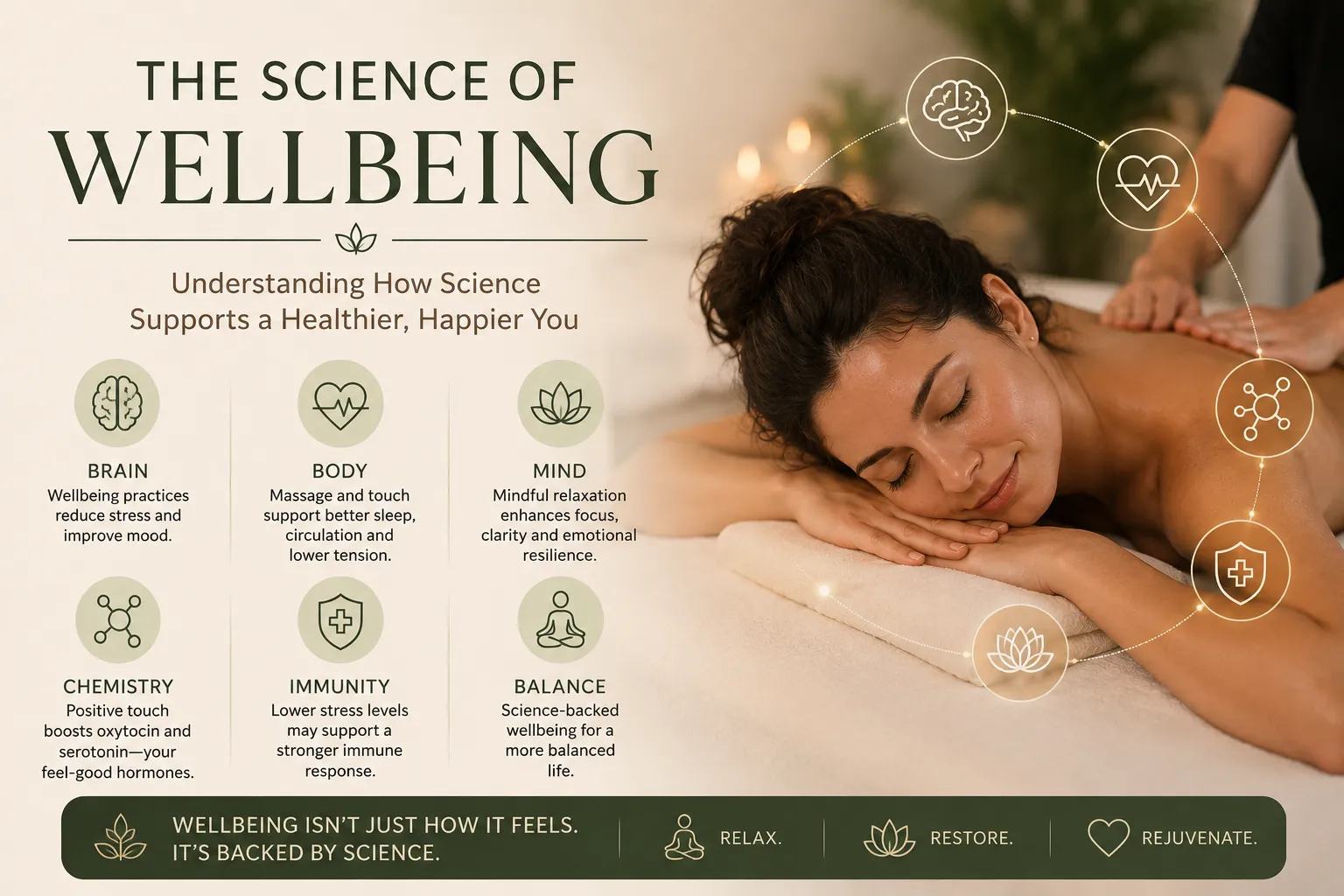
Wellbeing is not one feeling that can be switched on by a single activity. It reflects how people experience their health, daily life, relationships, sense of purpose and emotional state. A massage appointment may offer a useful period of rest and body awareness, but it cannot guarantee lasting wellbeing. The more credible question is whether the experience creates conditions that help you notice, choose and recover.
What does the science of wellbeing measure?
Researchers do not rely on one universal wellbeing score. The UK Office for National Statistics considers personal wellbeing through questions about life satisfaction, whether life feels worthwhile, happiness and anxiety. Its wider framework also covers individual, community and national factors. This matters because a pleasant hour and a fulfilling life are related ideas, not identical outcomes.
For a Londoner managing deadlines, travel and constant notifications, a session can therefore be judged through immediate, observable signs. You might notice quieter attention, less unnecessary effort in your posture, more comfortable breathing or a clearer sense of what your body needs. These responses vary between people and should not be presented as proof of healing, hormonal change or treatment.
Why one pleasant response is not the whole result
Scientific language can sound more certain than the evidence permits. Feeling calmer immediately after an appointment is meaningful personal feedback, but it does not show that a particular hormone changed or that the effect will last for a set period. Sleep, expectations, relationships, health, workload and the surrounding environment can all influence how someone feels.
A useful wellbeing practice should therefore support observation rather than impose an expected response. Clients do not need to feel transformed for the time to have value. A modest change, such as noticing tension sooner or protecting an evening from further demands, may be more practical than a dramatic promise.
The wellbeing feedback loop
A restorative experience works best when four conditions support one another. Together, they form a practical feedback loop rather than a guaranteed biological formula.
- Attention : Wellbeing begins with noticing. When attention is no longer divided between messages, work and travel, subtle signs of comfort or unease become easier to recognise. The NHS includes paying attention to the present moment among its five steps for mental wellbeing.
- Felt safety ” Privacy, hygiene, clear information and respectful boundaries influence whether a person can settle. Consent must remain active throughout any adult appointment. A client should be free to ask questions, request an adjustment, pause or end the session without pressure.
- Bodily feedback : A thoughtfully planned Tantric Massage in London may give an adult uninterrupted time to notice pressure, pace, temperature and breathing. A large review of touch interventions reports possible physical and mental benefits across varied settings, but the authors also note that perceived pleasantness is an important condition. That broad evidence does not prove that every technique or appointment will produce the same result.
- Recovery context : What happens afterwards can shape how the experience feels. A rushed journey into another commitment may quickly replace the sense of space created during the appointment. Leaving a short buffer for water, a quiet walk or an unhurried meal can make the transition back into London life gentler.
Where do mindfulness and movement fit?
Massage is only one possible part of a wider routine. Tantra Yoga may use breath, movement and focused awareness, while everyday wellbeing can also include sleep, exercise, nourishing relationships, meaningful work and appropriate healthcare. No provider should imply that a massage replaces these foundations.
This wider view prevents rest from becoming another performance target. Some days, progress may mean feeling energised. On others, it may simply mean recognising tiredness earlier and choosing a quieter evening.
How to choose a wellbeing-focused London appointment
Commercial labels are less useful than details you can verify. If you hope to find the most popular Tantric Massage parlour in London, look beyond popularity and ask how the provider explains consultation, privacy, therapist choice, hygiene and boundaries.
The best tantric studio in London for you will be one whose setting, communication and session format match your preferences. Before booking, use the therapist profiles and frequently asked questions to check what is offered. If information is unclear, ask before making a commitment.
A simple personal wellbeing check
Science becomes useful when it improves a decision. Before, during and after an appointment, ask three grounded questions:
- Do I understand the format and feel able to state my boundaries?
- Can I communicate changes in comfort, pace or pressure?
- Do I feel more aware of my needs afterwards, even if I do not feel dramatically different?
These questions keep the experience personal and realistic. Wellbeing is better understood as an ongoing relationship with attention, choice and daily conditions than as a result delivered to you.
If this approach suits what you are looking for, contact Tantric Massage London to discuss the session format, boundaries and practical arrangements before booking.









Leave a Reply