
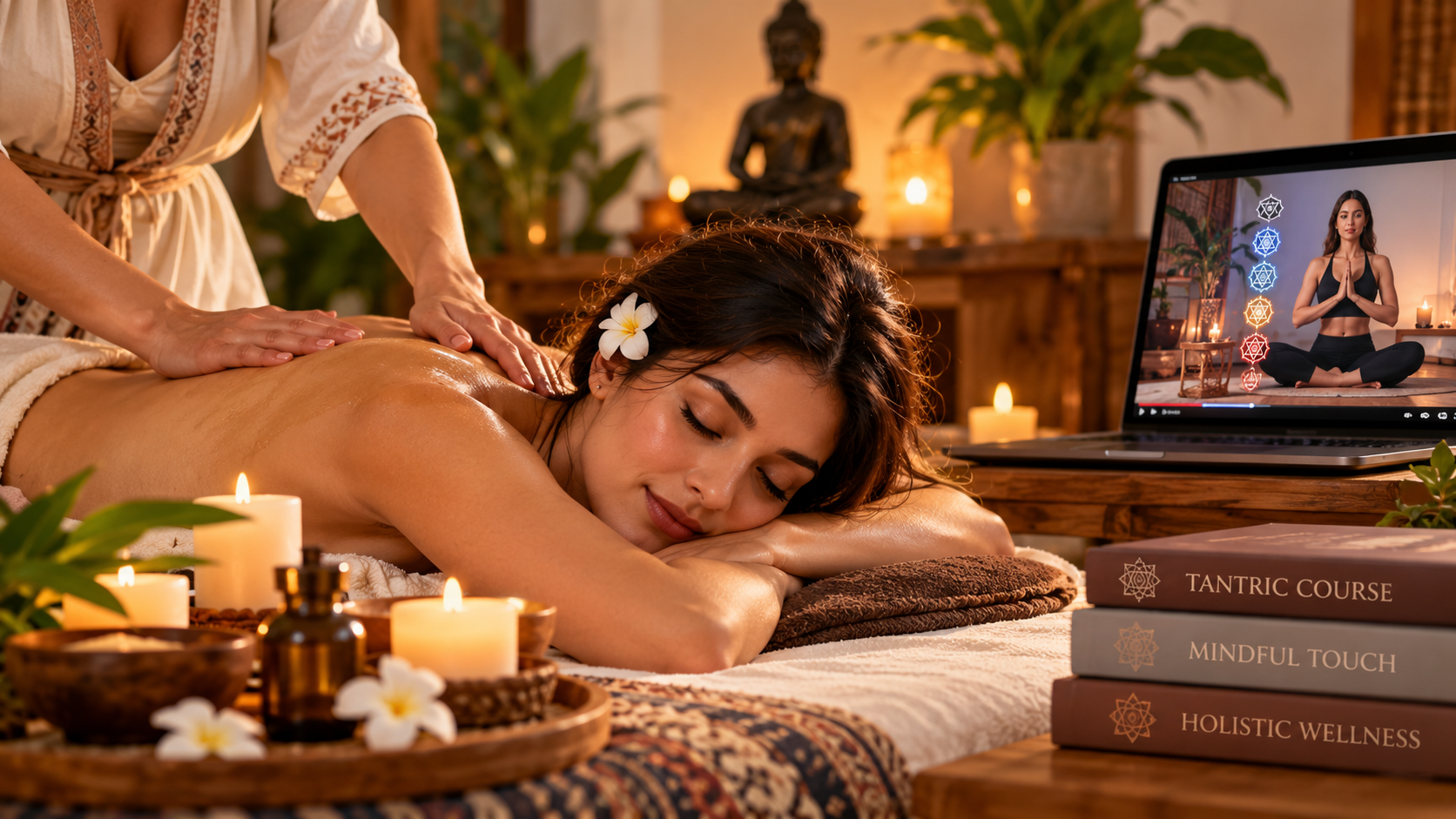
Mindful touch begins before contact: with clear scope, informed permission, agreed boundaries and the receiver’s ability to change or withdraw consent at any time.
Touch can communicate attention, reassurance or care, but its meaning is never automatic. The same pressure or gesture may feel welcome to one person, neutral to another and uncomfortable to someone else. Mindful touch starts by recognising that the receiver defines their experience.
The phrase healing massage is often used in wellness settings to describe massage intended to support relaxation, comfort or personal reflection. It should not be read as a guarantee that touch cures an injury, illness or psychological concern. Massage may be used to enhance wellness or alongside appropriate care, but it should not delay medical assessment for persistent or worrying symptoms.
An online tantric course can introduce ethics, consent language, reflective practice and the philosophy behind a provider’s approach. A holistic wellness course may connect those topics with body awareness, rest and everyday self-care. Neither format, by itself, makes a learner competent to perform professional massage safely.
What Mindful Touch Actually Requires
Mindful touch is not simply slow touch or gentle pressure. It is a responsive process in which purpose, permission and feedback remain clear. The practitioner or partner pays attention without assuming that silence means comfort.
- Purpose: Both people understand whether the touch is for relaxation, education, personal exploration or another clearly stated aim.
- Permission: Consent is specific to the person, area, activity and moment, and it can be changed or withdrawn.
- Pressure: The receiver can request lighter, firmer or no pressure without needing to justify the preference.
- Pace: Time is allowed for checking in, changing position, resting or ending the session.
- Privacy: Draping, clothing, room access, records and personal disclosures are handled according to clear agreements.
These dimensions matter in professional massage, partner learning and tantric massage education. Intimacy or spiritual language does not reduce the need for explicit boundaries; it increases the importance of clarity.
Healing Language and Health Claims Are Different
People may use the word healing to describe feeling rested, cared for or more connected with their body. Those subjective experiences can be meaningful without becoming clinical evidence. A responsible article or course distinguishes a personal account from a claim that massage treats a diagnosed condition.
The US National Center for Complementary and Integrative Health notes that evidence for massage varies by condition and that some reported benefits may be short term. It also advises people not to use massage to postpone seeing a healthcare provider about a medical problem.
Therapeutic massage can also mean different things across settings. In a clinic it may refer to work delivered within a defined healthcare or rehabilitation plan. In advertising it may be used more loosely. Readers should ask what the term means, what qualifications support it and what outcomes are being claimed.
What Online Learning Can Teach
Online learning is well suited to information that can be explained, revisited and discussed without performing a treatment. A course can introduce the provider’s understanding of Tantra, outline ethical principles and show how language shapes a touch-based interaction.
- Consent vocabulary: Learners can practise asking clear questions, offering options and responding appropriately to a no or a change of mind.
- Session structure: Teaching can cover preparation, stated scope, privacy, check-ins, closure and reflective notes.
- Body awareness: Learners can explore how attention, expectation and personal preference influence their own experience of touch.
- Claim literacy: A course can teach learners to separate spiritual, symbolic, subjective and medical explanations.
- Professional questions: Students can identify the qualifications, supervised hours, insurance and local requirements they need to investigate.
Recorded demonstrations may help a learner understand terminology or observe professional communication. They do not show how pressure feels in another person’s tissues or how to respond safely when pain, dizziness, distress or an unexpected reaction occurs.
What Requires Supervised Hands-On Training
Practical competence develops through observed practice, correction and assessment. Positioning, pressure, movement, draping, hygiene, contraindication screening and practitioner body mechanics all require more than conceptual understanding. Training should also address what to do when a session should be modified, postponed or stopped.
Intimate or erotic touch raises additional issues of consent, conduct, safeguarding, privacy and local law. Learners should not treat an online certificate as automatic permission to offer services. The provider must explain what its award represents and what it does not.
In the USA, massage regulation varies by state; NCCIH reports that many jurisdictions require licensing or certification. In the UK, some local councils require premises licences or therapist registration for massage and special treatments. Requirements may also involve insurance, professional membership, hygiene and business rules. Verify the current position where the service will be offered.
Massage Safety Is Individual
Massage is often low risk when appropriately performed, but low risk does not mean suitable for everyone in every form. NCCIH notes rare reports of serious harm, with vigorous techniques and people at increased risk among the concerns described. Pregnancy, medication, recent surgery, injury, skin problems, infection, bleeding risk, fragile bones and other health factors may require modification or medical advice.
A competent practitioner asks relevant questions without claiming to diagnose. They explain the proposed approach, invite questions and refer the client to an appropriate healthcare professional when an issue is outside their scope. New, severe, persistent or worsening symptoms deserve suitable medical attention rather than stronger massage.
Preparing to Receive a Wellness Massage
Preparation is not only the practitioner’s responsibility. A recipient can make the session clearer by deciding what they want, what they do not want and what information may affect safety. The aim might be quiet relaxation, a general wellness experience or learning about personal touch preferences. It should not depend on a promised medical result.
- Share relevant information: Mention health conditions, medication, pregnancy, recent procedures, injuries, skin concerns or other factors the practitioner asks about. Seek healthcare advice when suitability is uncertain.
- Confirm the scope: Ask which areas may be touched, what clothing or draping is expected and whether oils, heat, tools or intimate contact are involved.
- Choose clear language: Agree that words such as lighter, stop, pause and skip will be acted on immediately and without debate.
- Keep expectations proportionate: A session may feel pleasant, neutral, emotional or physically tiring. None of those responses automatically proves that healing, detoxification or trauma release has occurred.
- Report concerns: Tell the practitioner about unexpected pain, numbness, dizziness, breathing difficulty, distress or another adverse response, and obtain appropriate medical help when needed.
The receiver does not owe gratitude, disclosure or continued participation. A professional response to feedback is part of the service, not an optional courtesy.
Choosing a Practitioner or Course
Whether the interest is massage wellness, mind body relaxation or professional study, evaluate the person and the setting as carefully as the technique.
- Training and scope: What education, supervised practice and insurance support the service being offered?
- Consent process: How are areas of touch, clothing, draping, pressure and stop signals agreed before and during the session?
- Health screening: How does the practitioner identify reasons to modify, postpone or decline massage without exceeding their role?
- Hygiene and premises: What cleaning, linen, hand hygiene, accessibility, privacy and local licensing standards apply?
- Claims: Are benefits described proportionately, with no guarantee of cure, detoxification, emotional release or spiritual transformation?
- Complaints and records: Is there a clear process for feedback, incidents, privacy and concerns about professional conduct?
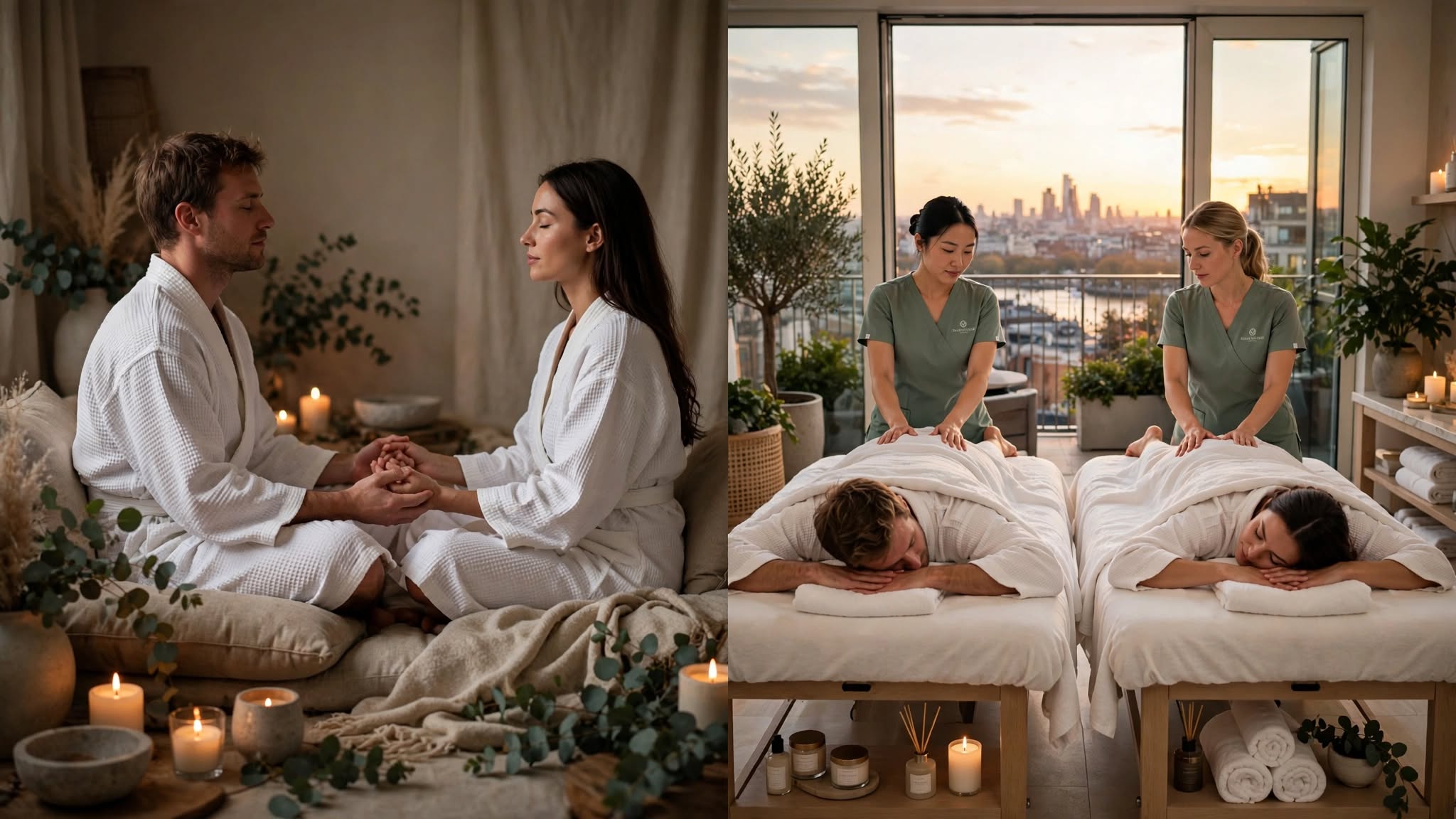
For partner massage, professional licensing may not apply in the same way, but consent and safety still do. Use only techniques that both people understand, avoid painful or forceful experimentation, and stop if either person is uncertain or uncomfortable.
Exploring Healing Massage With AOMT
AOMT presents its perspective on body massage and tantric massage through its healing massage page. Adults can use it as one starting point, then review the broader education pathways on the Academy of Modern Tantra website. Confirm the current curriculum, practical components, instructor qualifications, boundaries, fees and certificate scope directly before enrolling.
Apply the same evidence and safety questions to AOMT as to any provider. Ask which claims are educational or spiritual, which are supported by health evidence, and how supervised practice is assessed.
Touch Becomes Mindful Through Choice
Holistic massage education is most credible when it respects both the potential value and the limits of touch. Attention, comfort and mind body relaxation may be worthwhile wellness aims, but they should not be inflated into promises of treatment or transformation.
An online tantric course can build ethical language and conceptual understanding. Safe massage practice requires appropriate hands-on education, supervision and compliance with local rules. Across both settings, mindful touch begins with the same principle: the receiver retains choice before, during and after contact.
AOMT provides adult education in Tantra, somatic bioenergetic practice and holistic wellness for personal development and professional interests. Explore its learning pathways at academyofmoderntantra.co.uk.









Leave a Reply