

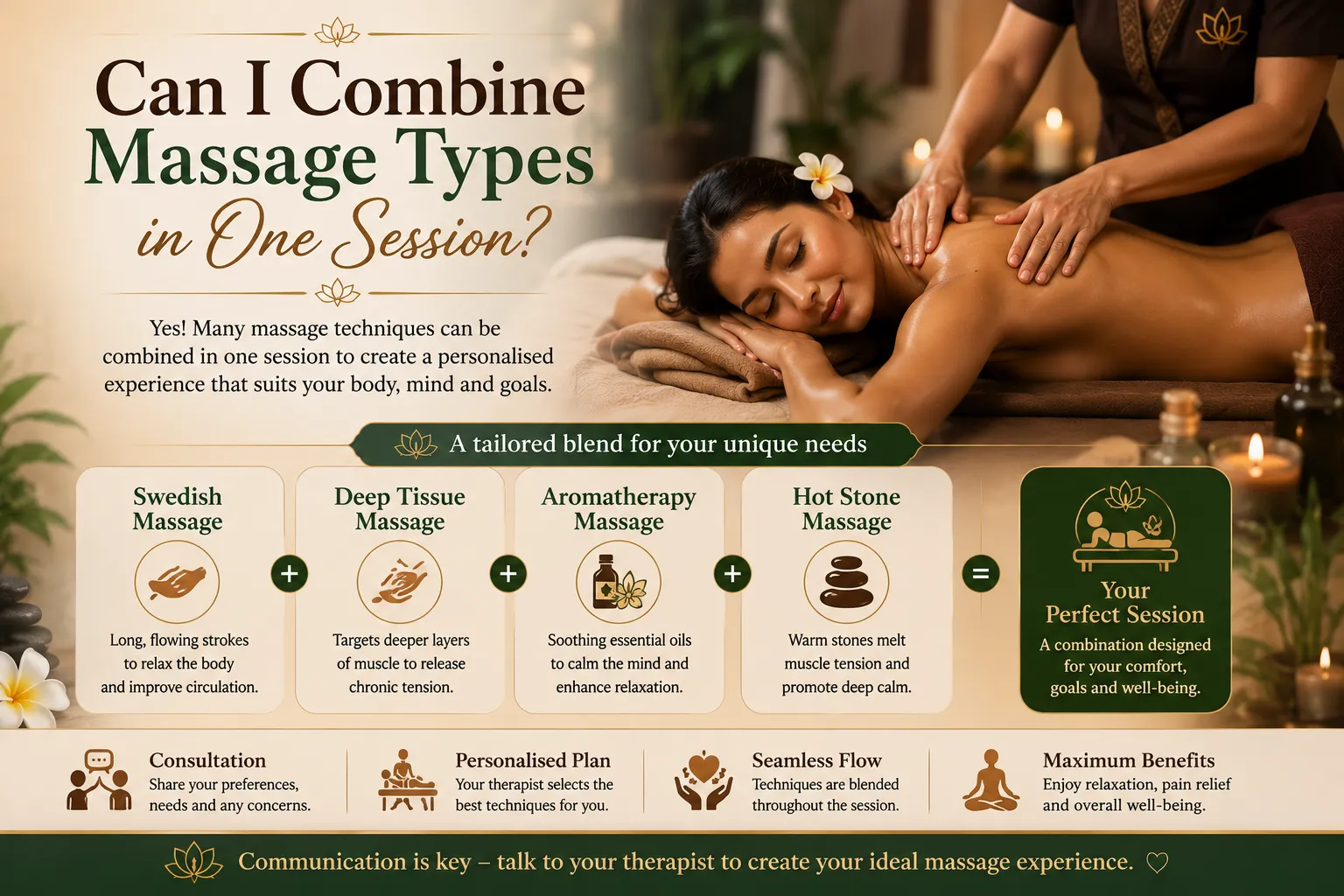
Yes, some massage types can be combined in one session, but only when the provider offers both formats and the therapist confirms that the techniques, products, setting and available time work together. A good combination has one clear purpose and a planned transition. It should not be an improvised list of treatments squeezed into a single booking.
Start with one lead style
The most coherent approach is a lead-and-layer plan. Choose one massage style to shape most of the appointment, then add one supporting element for a specific reason. This gives the therapist a clear structure while leaving room to respond to your comfort.
For example, a client might prefer a full-body format as the lead, with a slower pace or a short period of focused work layered into it. Someone else may be curious about a different product or technique but want the familiar rhythm of their usual appointment to remain dominant. Neither request should be assumed to be available. Describe the experience you want, then let the provider explain what can be offered responsibly.
Use the five-part compatibility test
Two styles may sound appealing separately yet work poorly together in practice. Before booking, test the proposed blend across five areas.
- Purpose: Do both elements support the same kind of experience, or will one interrupt the other?
- Technique: Can the therapist move between them safely and confidently within their competence?
- Products and setup: Does either style require different oils, gel, clothing, equipment, temperature or clean-up?
- Time: Is there enough time for consultation, preparation, both elements and an unhurried close?
- Boundaries: Have the scope, optional elements and a simple pause signal been agreed?
If one answer is unclear, ask before paying or travelling. The UK National Occupational Standard for body massage places consultation, agreed objectives, product selection, informed consent and work within professional competence at the centre of treatment planning.
Allow for the transition cost
A combined appointment does not provide the full version of two services for the price or duration of one. Every change has a transition cost. The therapist may need to alter the room setup, change products, explain a new position or clean the treatment area. Those minutes come from the booked time.
Ask how the session will be divided rather than requesting a vague fifty-fifty split. A clearer plan might reserve most of the appointment for the lead style and introduce the second element only after a comfort check. If the transition would make the session feel rushed, two separate appointments may be the better choice.
Review the current price and duration information and confirm the complete arrangement directly, since service details and individual therapist options can vary.
Match the request to the therapist
A provider may advertise several massage types without every therapist offering every one of them. Check the current therapist profiles, then ask whether your chosen practitioner personally offers the proposed combination.
Searching for the most popular Tantric Massage parlour in London does not answer that question. Popularity cannot show whether one named therapist has the right experience, products or setting for your requested blend. A useful reply should confirm what is possible, explain any limits and suggest a simpler alternative when necessary.
Keep related practices distinct
Broad tantric language can create confusing expectations. Tantra Yoga is a personal practice that may involve movement, breathing, meditation or philosophy, depending on the tradition and teacher. It is not automatically one component of a commercial massage session. If breathing or quiet awareness matters to you, describe that preference plainly instead of assuming a service label includes a yoga practice.
The same rule applies to every named massage type. Read the provider’s description, use the frequently asked questions to prepare, and request a clear explanation of what each proposed element means in that setting.
Treat consent as a live control
Agreement before arrival is only the starting plan. During the session, either person may decide that the combination no longer feels suitable. The client can request a different pace, return to the lead style, skip the supporting element or stop. The therapist can also decline a change that falls outside the agreed service or professional boundaries.
NHS guidance describes valid consent as voluntary and informed and notes that it can be withdrawn. In practical terms, silence should never be treated as agreement to an unplanned addition. Introduce one change at a time, confirm it clearly and check comfort before continuing.
Choose coherence over quantity
Before describing somewhere as the best tantric studio in London for a combined session, assess the quality of its answers. Can it identify the therapist, define both elements, explain the time split, disclose the products and confirm the boundaries? Clear limitations are more reassuring than a promise that every request can be accommodated.
A thoughtful blend should feel like one organised appointment, not two shortened treatments competing for time. To discuss a lead style, one supporting element and the practical transition between them, contact Tantric Massage London before booking.
Sources
- Provide body massage treatments using fundamental techniques, UK National Occupational Standards.
- Consent to treatment, NHS.










Leave a Reply