

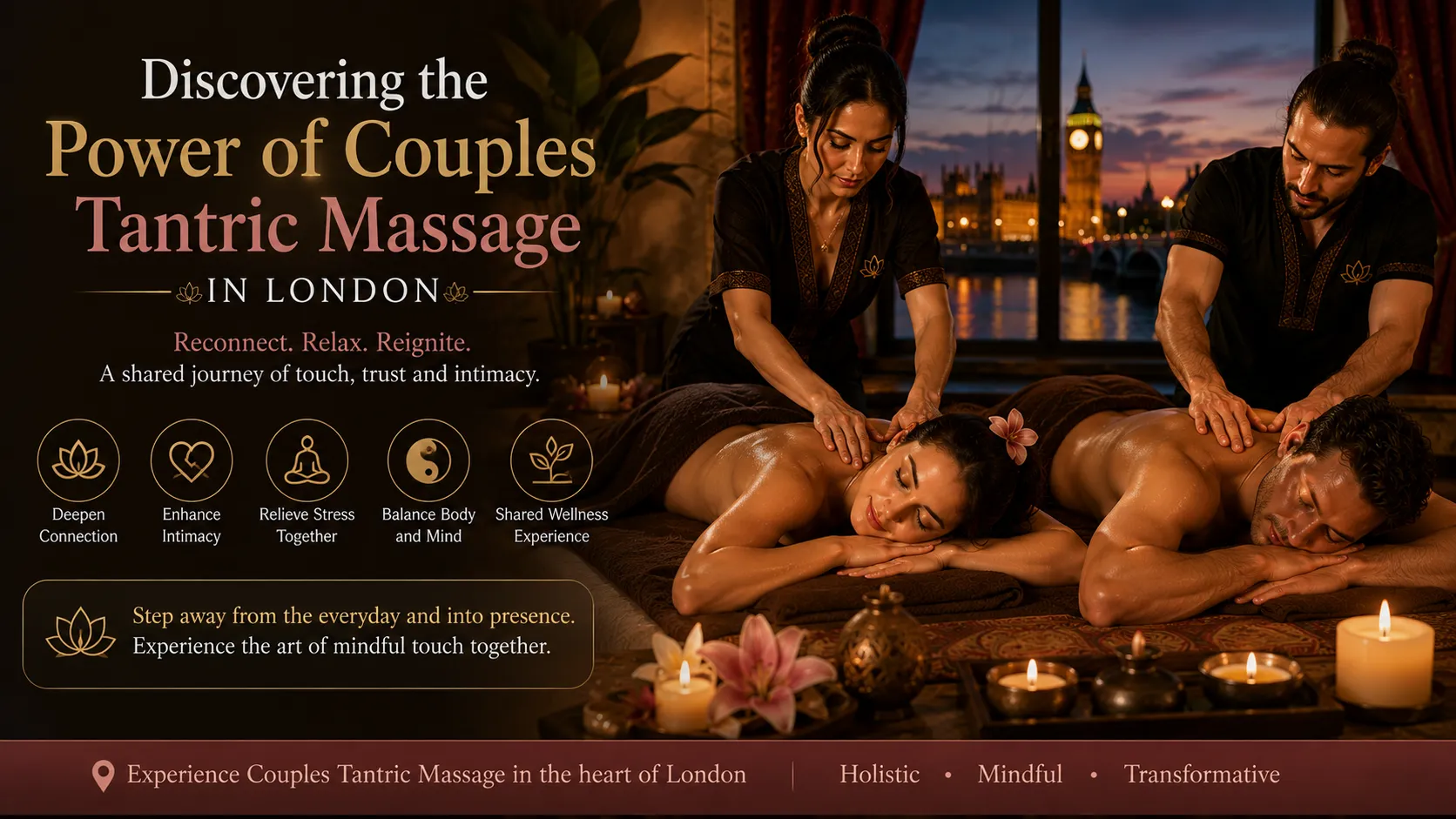
London gives couples endless ways to spend time together, yet few create genuine space to slow down. Dinner can become a conversation about work, while a quiet evening may disappear into separate screens. A couples tantric massage offers a different shared pause: two adults enter one prepared setting, receive professional attention at the same time and remain free to experience it in their own way.
The value of a shared appointment does not depend on both partners relaxing at the same speed or leaving with a dramatic revelation. Its potential lies in creating conditions for presence, choice and respectful communication. Clear expectations and personal boundaries can make the experience memorable without turning it into a cure for stress or relationship difficulties.
For London couples considering the experience, the most useful approach is not to ask whether massage has a mysterious power. It is to ask whether the session is designed well enough for two people to feel informed, comfortable and heard.
What is a couples tantric massage?
A couples tantric massage is a shared adult appointment in which both partners receive a massage during the same session, usually with a separate therapist for each person. Confirm the exact format, room arrangement, level of undress and style before booking. Nothing should be assumed from the service name alone.
A tantra-informed experience may emphasise unhurried attention, breath awareness, sensory presence and communication. These elements should never override professional boundaries. They work best when the scope is clear, each person can choose independently and the therapists check comfort.
People researching London tantric massage may encounter very different interpretations of the term. One venue may focus mainly on quiet relaxation, another on mindful body awareness, and another on an adult-sensitive service format. A clear written explanation is therefore more useful than an evocative label.
The shared-session compass
The power of a couples session becomes easier to understand through a four-point compass. Each point answers a different question: what do I want, what do we agree, what can the professionals provide, and what may change once the session begins? Keeping these questions separate prevents one partner’s enthusiasm from becoming the other person’s obligation.
1. Individual choice
Every couple contains two people with separate sensitivities and preferences. Booking together does not merge those differences. One partner may enjoy firmer pressure while the other prefers a lighter approach. One may want silence while the other feels settled by brief explanations.
Individual choice should cover pressure, positioning, products, room temperature, music, areas to avoid and privacy. A person may share the room but still want a private consultation. The provider should explain whether that is possible.
The useful principle is simple: nobody needs to match a partner’s level of confidence. A yes from one person is not a yes from both.
2. Shared agreement
Some decisions affect the couple as a unit. These include whether they want to be in the same room, whether conversation between them is welcome, how much time they can allow before and after the appointment, and whether the booking is intended as a quiet experience or part of a larger day together.
Agreement should reduce awkwardness without scripting the entire session. Before booking, ask:
- Are we both genuinely interested, or is one of us agreeing to avoid disappointing the other?
- Do we want the same room throughout?
- Would either of us prefer a private consultation first?
- Are there subjects or jokes we should avoid during the appointment?
- How will we respond if one person wants to pause or finish early?
- Do we want to discuss the experience immediately afterwards or later?
These questions may sound formal, but they remove much of the uncertainty that can otherwise follow a new shared experience.
3. Professional confirmation
A couple can agree on what they want, but the provider must confirm what is available and appropriate. Professional boundaries define the service, protect everyone and make informed decisions possible.
Before payment, ask how many therapists will be present, whether the treatment happens simultaneously, what the stated duration includes, how consultations are managed and what privacy arrangements apply. Confirm the cancellation policy, location, arrival time and any preparation requirements. If either person has a relevant health condition, recent injury, skin concern, allergy or pregnancy, disclose it in advance and ask whether medical clearance is needed.
The UK’s National Occupational Standard for body massage treats effective communication, consultation, informed consent, privacy, hygiene and responsive adjustment as core requirements. These offer couples a practical benchmark for assessing a professional appointment.
4. Live adjustment
A plan cannot predict exactly how either person will feel. Traffic may make someone arrive flustered, a fragrance may feel too strong, or the preferred pressure may change. Live adjustment is part of good service, not evidence that the booking has gone wrong.
Each person should be able to request a change directly. Useful phrases include “lighter pressure, please”, “could we pause for a moment?”, “I would prefer more explanation”, or “please avoid that area”. The therapist should respond without making the client justify the request.
Consent is an ongoing choice. The NHS explains the broader principle that a person may withdraw previously given consent before a procedure. In a massage setting, the practical standard should be even clearer: permission for one part of an agreed session does not create unlimited permission, and either partner can pause or stop independently.
Why sharing the room can feel different
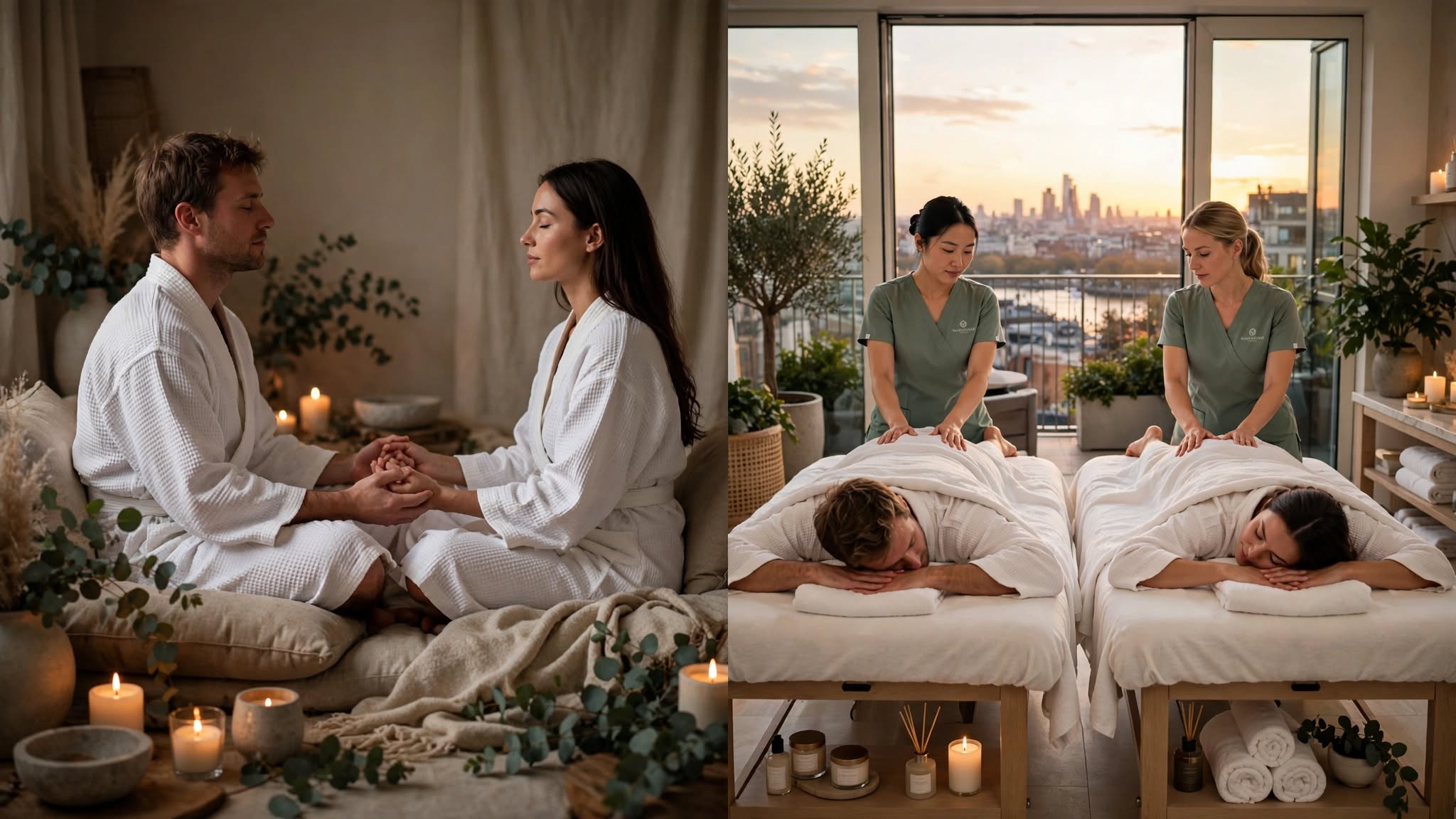
A couples appointment is not merely two individual massages booked at the same time. Sharing the setting changes the context. Each person is aware that their partner has also stepped away from everyday demands and is receiving focused attention. That awareness can create a sense of occasion, even when the two experiences are not synchronised perfectly.
The room may also reduce the need to entertain one another. A clear structure lets the couple be present without continuously deciding what to do or checking whether the other person is enjoying the activity.
This is not the same as promising a deeper bond. It is protected time with fewer decisions. What the couple makes of that time remains personal.
The power of parallel attention
Parallel attention means that both partners are cared for at once while retaining separate channels of communication. It is one of the most distinctive features of a professionally organised couples massage.
Parallel care does not mean perfect synchronisation. One client may need extra cushioning while the other asks for a slower pace. Equality does not require identical technique. It requires equal respect for each person’s needs.
Partners do not need matching reactions. Silence does not mean boredom, and visible relaxation does not create a standard to meet. Neither person should monitor or evaluate the other’s body.
What research can and cannot tell couples
Research on massage within couples is limited and should be interpreted carefully. One qualitative study examined 34 adults who completed a short programme involving massage exchanged between partners at home. Participants commonly described the practice as quality time and reported experiences involving relaxation, communication, gratitude and care. Some also found it difficult to make time, communicate pressure preferences or learn the techniques.
Those findings do not prove that a professional couples tantric massage will improve a relationship. The study was small, used self-reported experiences, concerned lay partner massage and did not assess long-term effects. Its authors also noted possible bias.
The most responsible conclusion is modest. A structured massage experience may provide conditions that some couples value, including uninterrupted time, shared novelty and an opportunity to communicate preferences. It is not couples counselling, medical treatment or a guaranteed route to greater intimacy.
Communication without turning the session into a test
New experiences can reveal differences in a couple’s comfort levels. That can be useful information, but only if neither partner treats it as a verdict on the relationship. The goal is not to prove openness, confidence or compatibility.
Before the appointment, each person can complete three sentences:
- “I am looking forward to…”
- “I am uncertain about…”
- “I would feel more comfortable if…”
The answers need not match. Differences help the provider plan accurately. One person may value the calm atmosphere, while the other values the novelty. One may want detail beforehand, while the other prefers an outline.
Feedback should go to the relevant therapist rather than through the partner. This protects autonomy and avoids making one person the spokesperson. Afterward, “What did you enjoy?” is kinder than “Did you feel the same as I did?”
Consent belongs to each person
A joint booking never turns consent into a group decision. Each adult controls what happens to their own body, and each can change their mind without needing the partner’s approval.
The more confident partner should not answer consultation questions for the other. A surprise booking requires enough advance information for informed choice. Nobody should be teased for asking for more coverage, a different position or an early finish.
Couples should also avoid private bargains that conflict with the provider’s professional rules. A session remains a service delivered by practitioners within a defined scope. The therapists are not participants in the couple’s relationship, and they should not be asked to take sides, validate a partner’s expectations or mediate unresolved conflict.
If there is current coercion, fear, significant relationship distress or disagreement about attending, postpone the booking. A massage setting is not the place to test a boundary or repair a crisis.
Choosing a professional London setting
London offers a wide range of massage businesses, independent practitioners and hotel-visiting services. Choice can be helpful, but polished photographs and dramatic claims do not tell a couple how the appointment will actually operate.
If a venue is presented as the most popular Tantric Massage parlour in London, a couple should look beyond the label and verify the service description, booking route, privacy information and answers to direct questions. Popularity language is not a substitute for professional conduct.
The best tantric studio in London for a particular couple is the one that fits both people’s requirements without pressuring either of them. Location matters, but so do communication, hygiene, therapist availability, room format and the provider’s ability to explain boundaries plainly.
The couples massage service page is the appropriate place to confirm the available format. Because therapist schedules and locations can change, verify the current arrangement rather than relying on an older article or directory listing.
Incall or outcall for a couple?
The setting influences how easily two people can settle. Incall means travelling to the provider’s professional location. Outcall means the practitioners travel to a suitable hotel or private residence, subject to the provider’s coverage and booking conditions.
When incall may suit
An incall appointment places the couple in a room arranged for the service. It may suit residents seeking separation from domestic routines or visitors comfortable travelling to a central location.
Check the exact address or meeting instructions before setting out. Allow time for station exits, luggage, rain and peak-hour delays. The current London massage locations can help with planning, but the specific couples arrangement still needs confirmation.
When outcall may suit
Outcall can suit hotel guests or couples who prefer not to travel afterwards. The room must provide enough space, privacy, warmth and access. Check hotel visitor policies and reception requirements in advance.
Do not assume every therapist, time or postcode is covered. Tell the booking team the area, property type and any access details. Remove work equipment and personal clutter from the usable space, silence non-essential devices and make sure neither partner is expecting calls or deliveries.
How to prepare without overplanning
Good preparation removes avoidable distractions. It should not turn the appointment into a performance with a fixed emotional outcome.
Before the session, confirm the time, location, duration and payment arrangement. Read the policies together and note unanswered questions. If one partner is uncertain, address it before travelling rather than hoping the atmosphere will change their mind.
On the day, allow a travel margin and follow the hygiene guidance. Avoid anything known to cause discomfort. Do not attend under the influence of alcohol or non-prescribed drugs. Bring essential medication and disclose relevant health information privately.
Some couples are familiar with breath awareness through Tantra Yoga and may choose a few quiet breaths before entering. This can be a simple transition ritual, not a requirement and not a claim about moving energy or producing a special state.
What a professional session should include
Exact processes vary, so the provider’s confirmed explanation is decisive. Still, a well-organised couples booking usually contains several recognisable stages.
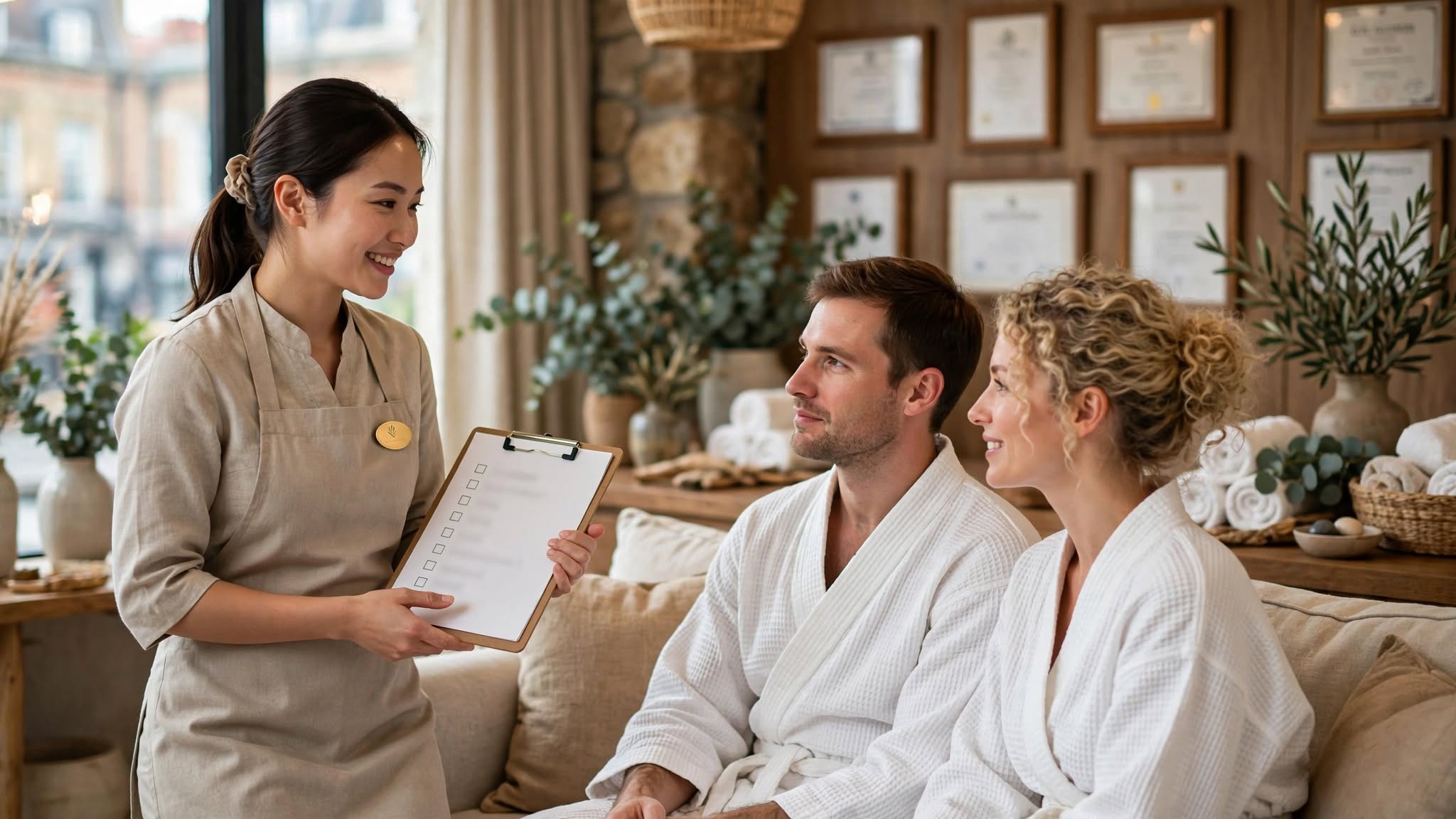
Arrival should include a consultation in which both clients can ask questions and state preferences. The therapists confirm the scope, setup and communication method. Privacy while changing, clean materials, coverage choices, positioning and products should be addressed.
During the massage, each therapist adjusts pace and pressure. Check-ins should support comfort without repeatedly interrupting rest, and feedback should be welcomed promptly.
The ending deserves care. UK massage standards include sufficient post-treatment recovery time as a professional consideration. Couples should have a reasonable moment to reorient, receive relevant aftercare information and prepare for the journey.
Protecting the experience from comparison
Comparison can turn a shared session into an unspoken competition. How quickly someone relaxed, how much feedback they gave or how expressive they appeared does not reliably measure enjoyment.
Agree that each person’s experience is valid. If one partner loved the session and the other felt neutral, neither response needs correction. Discuss what worked, what could change and whether either would choose it again.
Try a simple three-part reflection:
- Name one aspect that felt comfortable.
- Name one adjustment that would improve a future session.
- Name one thing you appreciated about sharing the time.
This format makes room for mixed reactions. It also keeps the conversation grounded in observable details instead of turning it into a judgement about affection or attraction.
When a couples session may not be the right choice
Choosing not to book can be the most respectful decision. A couples massage is unlikely to feel restorative when one person is reluctant, when the booking is meant to force a conversation, or when either partner expects the therapist to deliver a guaranteed result.
Postpone or reconsider if:
- one person has agreed mainly because they fear conflict or disappointment;
- the service scope remains unclear after asking questions;
- either partner has a health issue that requires professional medical advice first;
- there is insufficient privacy at the proposed outcall location;
- the couple expects identical responses or a particular outcome;
- the appointment is being used instead of appropriate relationship or mental-health support;
- alcohol or drugs are part of the plan;
- the provider dismisses questions about consent, hygiene or boundaries.
An individual massage may be more suitable if the partners want different formats or levels of privacy. Separate bookings can still support shared downtime without asking both people to compromise on the same room or schedule.
Frequently asked questions
These answers address the practical questions couples often need resolved before deciding whether a shared session suits them.
Do both partners have to choose the same style or pressure?
No. A shared booking should still allow individual preferences. Each person can discuss pressure, pace, positioning, products and areas to avoid with their own therapist. Confirm the provider’s ability to accommodate different requests before paying.
Is a couples tantric massage a form of relationship therapy?
No. It is a professional massage appointment, not counselling, psychotherapy or psychosexual therapy. It may provide quiet shared time, but it should not be promoted as a treatment for conflict, disconnection or intimacy concerns.
Can one partner stop while the other continues?
That should be possible in a consent-led service, although the room arrangement may affect how it is handled. Ask before booking. Each person should remain free to pause, request an adjustment or end their part of the session without pressure.
Is a surprise couples massage a good gift?
Only when the recipient understands the service and has expressed interest. Informed choice matters more than surprise. A gift invitation is better than a fully arranged appointment revealed at the last moment.
Should couples talk during the session?
Some couples prefer silence, while others welcome occasional conversation. Agree on a preference and tell the therapists. Comfort feedback should always remain welcome.
How far in advance should London couples book?
Availability varies by therapist, location, day and format. Coordinating two practitioners may take time, so enquire early and confirm directly.
What if we want different levels of privacy?
Raise this during the initial enquiry. Ask whether private consultations, screens, separate changing arrangements or individual coverage preferences can be supported. If the proposed format does not feel right for both people, choose another arrangement.
A shared experience without a shared script
The real power of couples tantric massage does not come from requiring two people to react as one. It comes from creating a shared setting where individual choice remains intact. The couple agrees on the broad experience, the professionals confirm what can be provided, and everyone retains the ability to adjust as the session unfolds.
That is the purpose of the shared-session compass. Individual choice prevents assumption. Shared agreement reduces avoidable tension. Professional confirmation establishes a trustworthy scope. Live adjustment keeps consent and comfort active. Together, these four points turn an appealing idea into a more considered adult experience.
For London couples, practical details make the difference. Choose a suitable setting, allow for travel, ask how the therapists are coordinated, discuss privacy and leave enough time afterwards. Let the appointment be an experience rather than an examination of the relationship.
If you are both interested and ready to discuss your preferences, contact Tantric Massage London to confirm the current couples format, location and availability before booking.
Sources
These sources support the article’s research, professional-practice and consent boundaries.






Leave a Reply